Skip to content
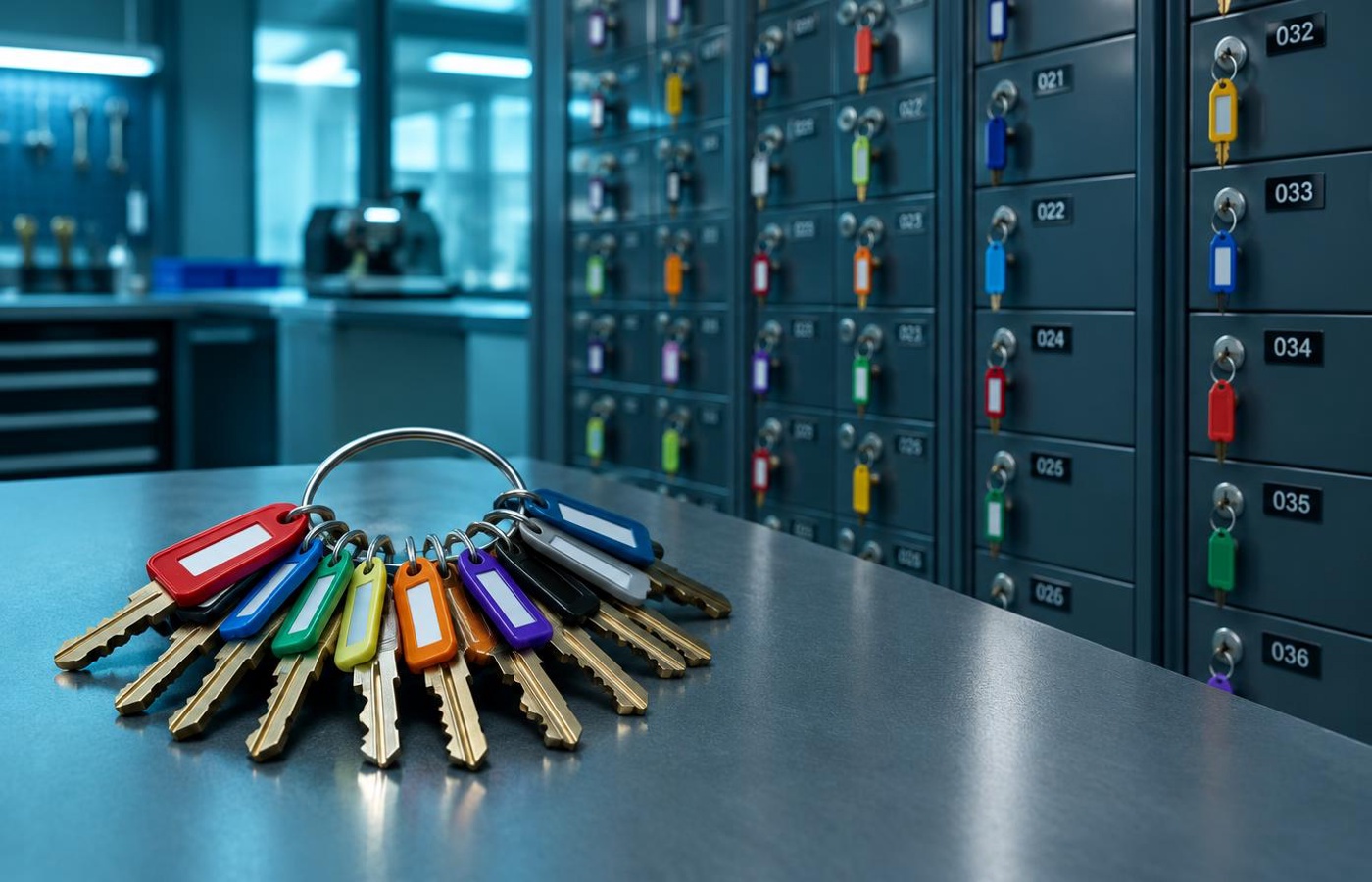
Ring of master keys with colour-coded tags in front of key cabinets
Key hierarchy and access planning

Master Key Systems Toronto

One key for the front door. Another for the office. A single master that opens everything. Our master key systems Toronto service designs access so it can grow with the building instead of being rebuilt every year.

Design the key system before you cut the keys

A master key system is a hierarchy, not a collection of locks that happen to share a key. Done badly, it creates a master that opens doors it should not, keys that cannot be withdrawn when someone leaves, and a building that has to be rekeyed from scratch every time staff change. Rebuilding is expensive and it never happens at a convenient time. Master key systems Toronto work starts with a simple plan: who needs which door, what each door protects and how keys are issued, returned and recorded. From that we build the levels — grand master, master, sub-master and individual keys as required — using restricted keyways so copies cannot be made without your authorisation. Every key gets an identifier and every door gets documented. The result is that a departing employee becomes a small repinning job on two or three doors rather than a building-wide expense. A master key systems Toronto project should make the building easier to run five years later, not just on the day it is handed over. Where a hierarchy pays for itself Multi-unit rentals, small offices, clinics and any building with a mechanical room behind a door that matters. If you have ever driven across the city at eleven at night because a former employee still had a key, the case makes itself. Master key systems Toronto projects also make daily maintenance simpler, because the person who needs the riser cupboard does not need a key to every other door in the building. What you actually receive A door-by-door schedule stating which key opens what, numbered keys with tags and a written record of who holds each one. Where restricted keyways are used, the authorisation process is explained so you know how replacements are handled. None of this is complicated, but it only works if it is written down and stored with the building documents instead of taped inside a drawer. Leaving room to grow Buildings change: a suite gets split, a tenant takes two more rooms, a manager leaves. A hierarchy designed with one spare level costs almost nothing at the start and saves a full rebuild later. Our master key systems Toronto planning always leaves space for a door nobody has thought of yet, which tends to be the one added first.

Locksmith service photo

How the system holds together

Hierarchy, restricted blanks and the practical side of staff turnover.

Designing the hierarchy

Start with the doors, not the keys. Group them by who genuinely needs access, then assign a level to each group. Master key systems Toronto projects usually end up with three or four levels, and that is enough for most buildings. More levels look impressive on paper but become impossible to administer when people change roles.

  • Doors grouped by access need
  • Three or four levels is usually enough
  • Documented before installation

Restricted keyways explained

A restricted keyway uses a blank that a hardware store cannot duplicate. Only the authorised dealer can cut it, against your written approval. Within master key systems Toronto buildings, that single choice is what turns key control from a policy in a binder into something physical that actually prevents unauthorised copies.

  • Duplication needs your approval
  • Blanks held by the dealer
  • Physical, not just procedural control

Staff turnover without a full rekey

When someone leaves, we look up their key number, find which doors it opened and repin only those cylinders. The rest of the master key systems Toronto hierarchy carries on unchanged, so other staff keep working keys and you avoid reissuing the entire building. It is the main financial argument for documenting the system properly in the first place.

  • Key number traced to doors
  • Only affected cylinders repinned
  • Issue record updated

Access control does not replace key control

A card reader on the front door feels like the whole problem is solved, right up to the first power cut, the dead fob battery or the wedged fire door. Every electronic entrance still has a mechanical override, and every service door still has a key. Within master key systems Toronto buildings, the sensible pattern is to keep the electronic system and the mechanical hierarchy documented together, so nobody has to guess which of the two is protecting a given door at two in the morning.

  • Overrides identified and keyed
  • Service doors brought into the plan
  • Single document for both systems

What a key system includes

Documented access instead of a drawer full of unlabelled keys.

Access mapping

Every door surveyed and assigned to the people who genuinely need it.

Master key hierarchy

Grand master, master and individual levels defined before a single cylinder is pinned.

Restricted keyways

Blanks that cannot be duplicated at a hardware store, protecting your key control.

Key issue records

Numbered keys with a written record of who holds what and when it was returned.

Simple revocations

Lost keys or staff changes handled by repinning the affected doors only.

How the project runs

  1. 01

    Walk the property

    Every door, its use and its risk documented on a simple plan.

  2. 02

    Agree the hierarchy

    Who gets which level of access, and how keys are issued and returned.

  3. 03

    Pin and install

    Cylinders pinned to the new system and fitted, door by door.

  4. 04

    Handover pack

    Keys, records and a plain-language chart of who can open what.

Master key system questions

What is the difference between a master key and a sub-master?

A master key opens every door in the system, while a sub-master opens only its own group of doors. Planning the groups properly is what stops a master ending up in the wrong hands.

Can you add a master key to my existing locks?

Often yes, provided the cylinders can be repinned and the current keyway is not restricted by another supplier. We check compatibility before quoting.

Why are restricted keyways worth the extra cost?

Because they stop casual duplication. Without authorisation from your building, a blank cannot be copied, which turns key control from a policy on paper into something physical.

What happens when a key holder leaves?

We repin only the doors that key could open and reissue the affected keys. The rest of the system keeps working, which is the main financial argument for a hierarchy.

How long does a master key systems Toronto project take?

It depends on the number of doors and whether existing cylinders can be repinned. Most single-floor offices are completed in one visit, while larger buildings are phased so access is never lost.

Can you take over a system another company installed?

Usually. We start by reading what exists: which cylinders are in place, whether the keyway is restricted to another supplier and how many keys are unaccounted for. If the current hardware can be repinned into a clean hierarchy, that is far cheaper than replacing every cylinder, and we will say which doors genuinely need changing.

Can we start with a few doors and expand later?

Yes, and it is often the smarter route. A small block of doors planned with room for a second phase costs less up front and avoids reissuing the whole building when you add the next floor. The only requirement is that the hierarchy is designed before the first cylinder is pinned.

Get one key system you can actually manage

We will map the doors, define the levels and document the result so access stops being guesswork.

Book a consultation

Plan a master key system

Tell us how many doors and how many people need access, and we will propose a hierarchy and a documented plan.

647-956-0821

Business details are used only to prepare this plan.